Sunday, November 17, 2013

Fairy Food for the Holidays: Pavlova

I know this will come as a shock, but I'm sort of addicted to food-related television. I grade papers with Julia Child's shows on in the background (I have them on DVD). I wait in eager anticipation every week for Top Chef like other folks look forward to The Walking Dead. Anyhoo, I was watching reruns of Masterchef: Australia on Youtube the other day, and they made pavlova. Named for the famous Russian ballerina, Anna Pavlova, this really does look like fairy food. Having never heard of pavlova before, I immediately started reading about it. Evidently, it's considered a summery dessert (though Aussies eat it year round), though it feels holiday-esque to me.
It's simple to construct, as long as you're careful. I used Alton Brown's recipe
His instructions were clear and simple (though 4 ounces of egg white is approximately the white of 4 large eggs, and 6 ounces of sugar is just in between 3/4 and 1 cup). If you forget to get your eggs out in advance, put them in a bowl of tepid water to bring them to room temp.
.
Follow his instructions to get the glossy, white mix that you can then shape into a cake-ish circle. I just threw some parchment paper over the bottom of  a springform pan. It worked great.
Admittedly, I did s#$% the bed on this one a little bit in my impatience. When Brown says to let it cool in the oven by letting the door hang open, do it. I, however, really wanted to see it!
So I did. I put it on a cold granite counter. It's supposed to have a few cracks in it like this, but the too-rapid cooling made mine crater a little bit. Clearly, I have the impulse control of a toddler. I do think that next time I will make little single-serving circles because cutting into the big one caused it to break up a bit, which is evidently normal. However, it is sweet and airy and lovely. 

I made a red wine-saffron sauce to go with mine. I really like booze in my food. And while I'm cooking it. And while I'm eating it. This boozy concoction makes a deep reddish-purple, rich, spicy sauce. In a saucepan, combine 1 3/4 cups water, 1 1/2 cups red wine, 2 T balsamic vinegar, 3 T honey, and 1/3 cup sugar. Let that simmer for about 15 minutes or so until it slightly reduces. Taste it and make sure you like the level of sweetness. Remember though, that the pavlova is an extremely sweet dessert to begin with, so you may not want the other components super-sweet as well. To your reduction, add 2T corn starch (mix in a separate bowl with 2T water and then add), a tiny scrape of nutmeg, 2 cloves, and a pinch of saffron. Let this boil for about a minute and then turn off the heat. Remove cloves.

We're big fans of homemade whipped cream around here. I used an 8 oz. carton of heavy whipping cream, 1T powdered sugar, and 1/2 t. orange extract. Whip with a hand mixer until peaks form. Do not comment on how generally dirty this section sounds.
Pavlova with red-wine reduction, whipped cream, and strawberries! It's crunchy on the outside and soft on the inside. The tart strawberries were a good contrast to the sweetness. As much as I generally hate reality television, I have to say that I quite like watching food programs like Masterchef when it's set in other countries. On the down side, it's a huge contrast to the American version, which is much more focused on the theatrics, but on the upside, it's nice to see people being pleasant to one another, and even better, getting to learn about food I've never experienced, which makes me mad to try it. And even more fun, people who make this dessert routinely seem to be engaged in an unspoken contest to see who can pile the most topping on their fragile pavlova before the whole thing collapses. Check it out:
Kiwi, strawberry, and passion fruit are the most common toppings.
How is this not collapsed?
I'm so tempted to see how much I can load on with the next one.
Recipes after the jump!!

Thursday, November 14, 2013

Handy Food Blogs and Some Holiday Meal Links

Well, kids, the holidays are nigh upon us. 
Personally, I love the holidays. They're a good time of year for a food whore. I mean, foodie. I'm hugely fond of cooking for days for the folks I love. I'm sorry to admit it, but I love seeing Christmas displays in October, listening to Christmas music while I'm planning the Thanksgiving menu, and I would totally put up the Christmas tree the day after Halloween if I could talk my husband into it. It's a sickness. I love the colorful, sparkly happiness of it all.

To that end, I thought I'd just do a list of links to fun recipes, blogs, gadgets, and anything else that may inspire you!
  • As you know, I'm a big fan of Ben Starr. Here's a link to his extensive blog post on how to prepare a brined turkey. He even has a video to show you how! 
  • Deb at Smitten Kitchen did a humorous post on how to do chicken stock in the crockpot! Freaking genius, I say, when we all know that good stock is the basis of rad stuffing and gravy and well played at a time when stove-top space is at a premium. 
  • The ladies at Spoon Fork Bacon have a luscious-looking recipe for sweet potato and rosemary gratin for those of you tired of that crap with the marshmallows on top. (I'm deeply sorry if the marshmallow version is your favorite. Sort of.)
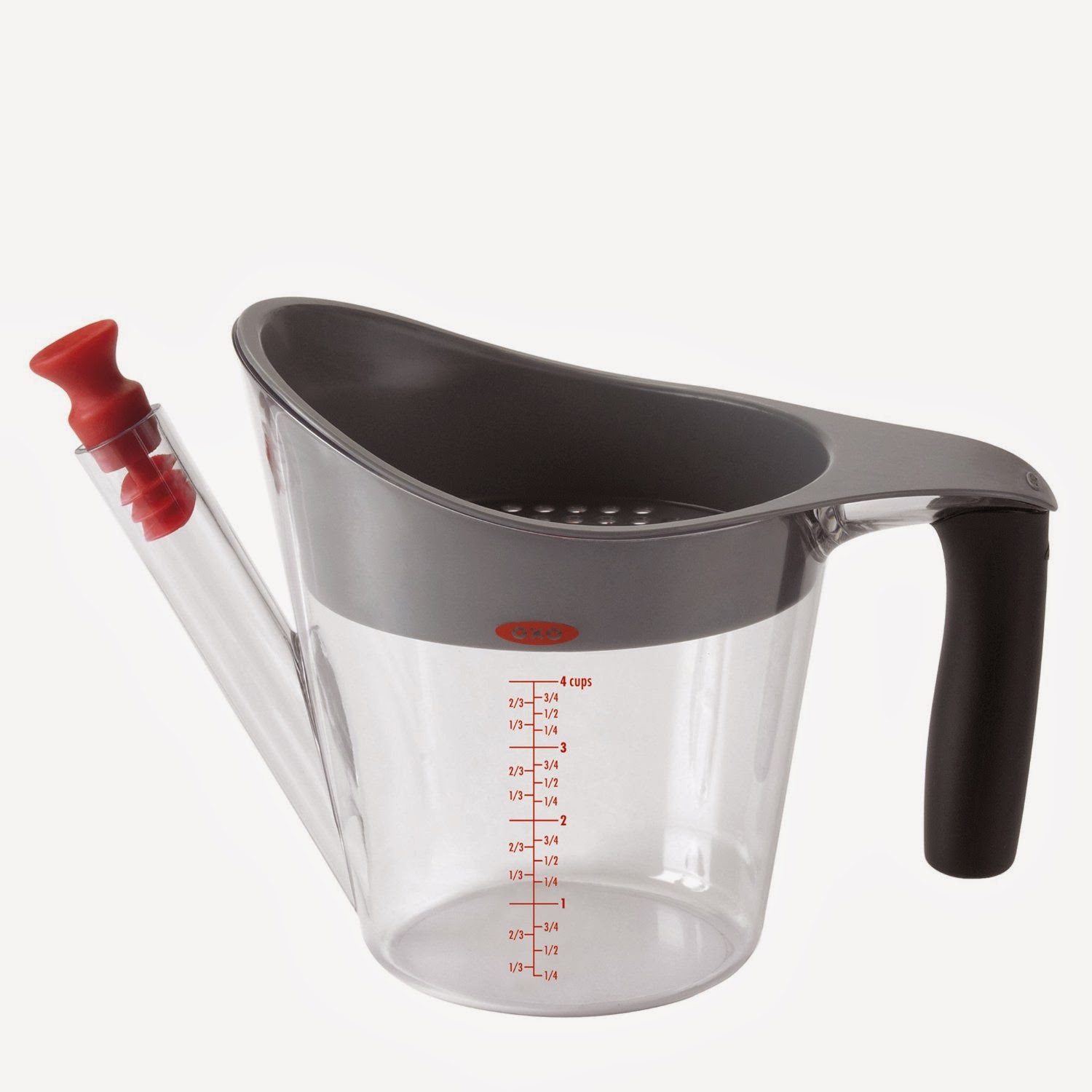
  • This little gadget is the secret to turning the turkey drippings into something non-greasy and delicious. 
    The built-in strainer will strain out the big chunks, and if you wait a bit for the grease to separate and rise to the top, the spout will allow you to pour out the tasty juices sans grease. 
  • Every year, I make Martha Stewart's Steamed Cranberry Pudding for my momma. Don't be turned off by "pudding" in the title; it's just a really moist, thick cake that is as good as licking the batter out of the bowl. For the pudding, you'll need one of these:
    You put your cranberry mix in the bottom, top it with the cake batter, and lower the whole thing into a pot of boiling water (up to just below the lip) for a gorgeous holiday cake.
    The best part is that if you get the mold, there are a variety of recipes appropriate for all times of the year at the Martha Stewart Living website. And it's so pretty!
  • Jerry at Cooking Stoned posted this recipe for Cranberry Christmas Sangria. You can bet your turkey wishbone this will be happening at some point Thanksgiving weekend. 
What are some of your favorite Thanksgiving traditions/dishes? Some of our favorites include orange-rosemary turkey, butternut squash risotto, glazed bacon-wrapped green beans, my grandmother's cranberry salad, and maple-pecan pie. I'll post some of those recipes as the big day draws nearer!

Tuesday, November 12, 2013

OhFeelYa's Easy...Dinners--Smashed Potatoes with Bacon and Pickled Veg


This may be my laziest meal yet. But it's been a busy weekend, and my hubby is pretty easy to please. Like I've said before, he loves pork and potatoes like the proverbial fat kid loves cake (I'm the fat kid in this scenario; he's super thin). So I took eight medium-sized red potatoes and microwaved them at two-minute intervals until they were easy to slide a fork into. Lazy, I tell you. Can't even be bothered to bake the potatoes. Set aside.

I cooked a package of thick-cut bacon in the laziest way possible: under the broiler. See that cookie sheet pictured below? You can lay bacon out on it, put it under a 350 degree broiler, and it will cook evenly in twenty minutes or so without crapping up your stove top and popping you in the eye every time you lean over it (am I the only one that happens to?). When the bacon is done, transfer it to a plate with a paper towel to drain. Since bacon grease is like cash money around here, I got out my nearly empty mason jar, put a strainer over it, and tipped the run-off into my stash. Because God forbid we run out of bacon grease up in here. If you do hang on to the grease, and you ought to, make sure you let it cool to room temp before you put it back in the fridge to prevent bacteria growth. Chop the bacon into whatever size makes you happy.

On the still greasy cookie sheet, space your potatoes evenly apart. Using whatever smashing mechanism you fancy, just press the potatoes until they flatten a bit without totally disintegrating. I put a tiny bit of butter on each potato, layered them with bacon, and cracked a generous amount of black pepper over them. Put them back under the broiler to warm it all and crisp up the edges.
I totally get that this is not a heart-healthy meal. I don't personally eat like this because I battle weight and high blood pressure, but my very tall, very thin spouse eats this kind of thing consistently without any cholesterol or weight problems. We should all be so lucky. However, this recipe would work equally well with a shredded rotisserie chicken, some leftover brisket or roast, or pulled pork.

Now for the part that cuts through all the grease and makes this plate of food shine like one of my students before they get their first paper back. Quick-pickled vegetables are bright, cut through rich, fatty foods, and are super easy to make. In a desperate attempt to get some veg into my husband, I went with carrots, onion, and a little garlic. You can also use cucumber, fennel, radish, etc.... Cut three carrots, half an onion, and two cloves of garlic pretty thin. If you have a mandolin collecting dust somewhere, bust it out.
In a non-reactive saucepan (look at the bottom--if it's stainless steel, you're good to go), mix 1 1/2 cups filtered water, 1 cup mirin rice wine vinegar (you can get this on the Asian isle at the grocery store), and a splash of apple cider vinegar. For seasoning, I threw in three juniper berries, two whole star anise, a tablespoon of mustard seeds, 1/2 teaspoon red paper flakes, about five turns of the sea salt grinder, and a tiny pinch of cayenne pepper. Remember, if you are lucky enough to have a Central Market or Whole Foods nearby, you can buy a pinch of these seasonings for pennies (and without having to buy an entire bottle). Use more red pepper if you want it spicy. Bring your snazzy brine to a boil. 
Layer your soon-to-be pickles into a jar and pour the hot brine over them. Pickles come in glass jars for a reason--they don't react well with plastic or reactive metal.  
Again, let them cool completely before you refrigerate. If you want them super crunchy, let the brine cool before you pour it on the vegetables. I like mine mostly crunchy, and I pour the hot brine over them after it's not boiling any more. (If you do cucumbers, which are more fragile than carrots, then I would let the brine cool a bit to at least warm but not hot before adding for crunchy cucumbers.) If you want the veggies a cooked consistency, put them in the boiling brine and let them cook, but not all the way. It's up to you! Remember they'll continue to soften in the brine after they're refrigerated.The longer these sit, the better they taste, so make them first!
Holy crow, these are good. They take this very basic meal and make it a lot more special. Plus, making your own pickles will impress the crap out of your family! 
Yum. I had one forkful and then turned the plate over to my husband, who promptly doubled the amount of food on the plate. Yesterday, we had a Veteran's Day celebration at school. Our little cantina catered in sandwiches, brownies, etc...and I took the larger jar of pickled carrots to spice up the rather bland sandwiches. They were a big hit with the vets!

Monday, November 11, 2013

Honeysuckle Pomegranate Jelly

Oh, pomegranate, how do I love thee...but I hate your damn seeds! I really fell in love with pomegranate at a work picnic. We were all asked to bring something from our family/ethnicity. One of my colleagues had made wonderful flatbread and served it with barely pulled-apart hunks of pomegranate drizzled with honey. It was gorgeous and exotic but had so many seeds that I found unpleasant to chew. But, I love the flavor of the juice, so when I saw these two pomegranates, literally jumping off the shelf to get into my cart, I thought, it's jelly time! You know I also have massive tea fetish, particularly when it comes to jam and jelly. I also knew I didn't have enough fruit to make much jelly, so I would need some extra liquid.
So, I made a simple syrup infused with the tea first. I put 1 1/2 cups each of sugar and filtered water, along with five Republic of Tea White Honeysuckle tea bags. I really wanted to go with a white tea so as to not overpower the pomegranate or dilute the beautiful ruby color. When the syrup had gotten, well, syrup-y, and the tea flavor was strong enough, I strained it all into a bowl. Then I dumped the pomegranate and 3T of water into the pot to simmer and break down. I did use the side of my spoon to help burst some of the seeds, but don't go too nuts. If you pulverize the seeds, your juice may be bitter. Once the fruit was broken down, I gently ran it through a chinois (any fine strainer or cheesecloth will do).
When I had gotten all the juice extracted that I could, I put the syrup, juice, lemon juice, vanilla and allspice back in the pot to heat up. When it came to a boil, I added the pectin and let it boil for a minute. I did a crappy job on my frozen saucer test, however, so I'm suggesting you all add more pectin than I did (I adjusted the recipe below for you). I'm always shy with the pectin, and then I have very, um, juicy jelly. Sigh. I will learn one of these days.

While I was working on my jelly, I found a standard recipe for pumpkin bread and made it with some of last week's fresh pumpkin puree and added in some extra spices to compensate.
I was kicking myself for not having nuts. Sigh. However, I'm a big fan of brushing the crust with melted butter both once while it's baking and then again when you take it out of the oven so some pretty turbinado sugar sprinkled on will stick. Especially when you have a nutty crust (nuttier than me), this makes for a nice, caramelized crunch on top.

Voila! Honeysuckle Pomegranate Jelly and Pumpkin bread. You better believe I took one of these muffins and scoured the jelly stuck to the bottom of the pot. The pumpkin and pomegranate were particularly fabulous together.

Saturday, November 9, 2013

Cookbooks I Can't Live Without

How many cookbooks do you have? I only ask because I have a sneaking suspicion that I may be a cookbook hoarder. I see my friends and family cocking eyebrows. Fine, I'm a book hoarder in general. What do you expect from a literature professor, really?
One wall of my study, complete with Colin Firth.
The other wall. That's my Granny Pauline's purple loveseat. She taught me how to make apple pie, pancakes, cheese grits, and fried chicken.
Anyway, as bookish folk here in my household, (thank goodness my husband is a lit professor as well because he never criticizes my great love of books), our motto is "When in doubt, go look and see if we have a book on that topic." A great majority of the time, we do.

Cookbooks are no exception. I love them feverishly. And now that I'm not always scrounging for material for my dissertation, the cookbook section is the first I gravitate towards when I go to any bookstore. I thought I might go through my collection and write a bit on a handful of the cookbooks I love the most and why. This is my current cookbook collection, conveniently stashed in the kitchen, finally.
I finally broke down and added a cookbook shelf in my kitchen. Before, I had cookbooks stashed in about four different locations. This is a super-cheap Ikea garage shelf I painted with leftover paint I had from the wall behind it.
 A new cookbook I recently picked up, Harold McGee's Keys to Good Cooking, is the most amazing encyclopedia of cooking I've seen so far. As a former literature professor, McGee is a man after my own heart. Read more about McGee, an avid food writer, here. He's remarkable. This book, however, is not a collection of recipes. McGee doesn't tell you what to cook but rather how to cook it. He cover things that vex every cook, like how to keep sauces from getting overly thick or what to do if they break. From canning to baking to roasting to frying, McGee will tell you the inside secrets to making it work.


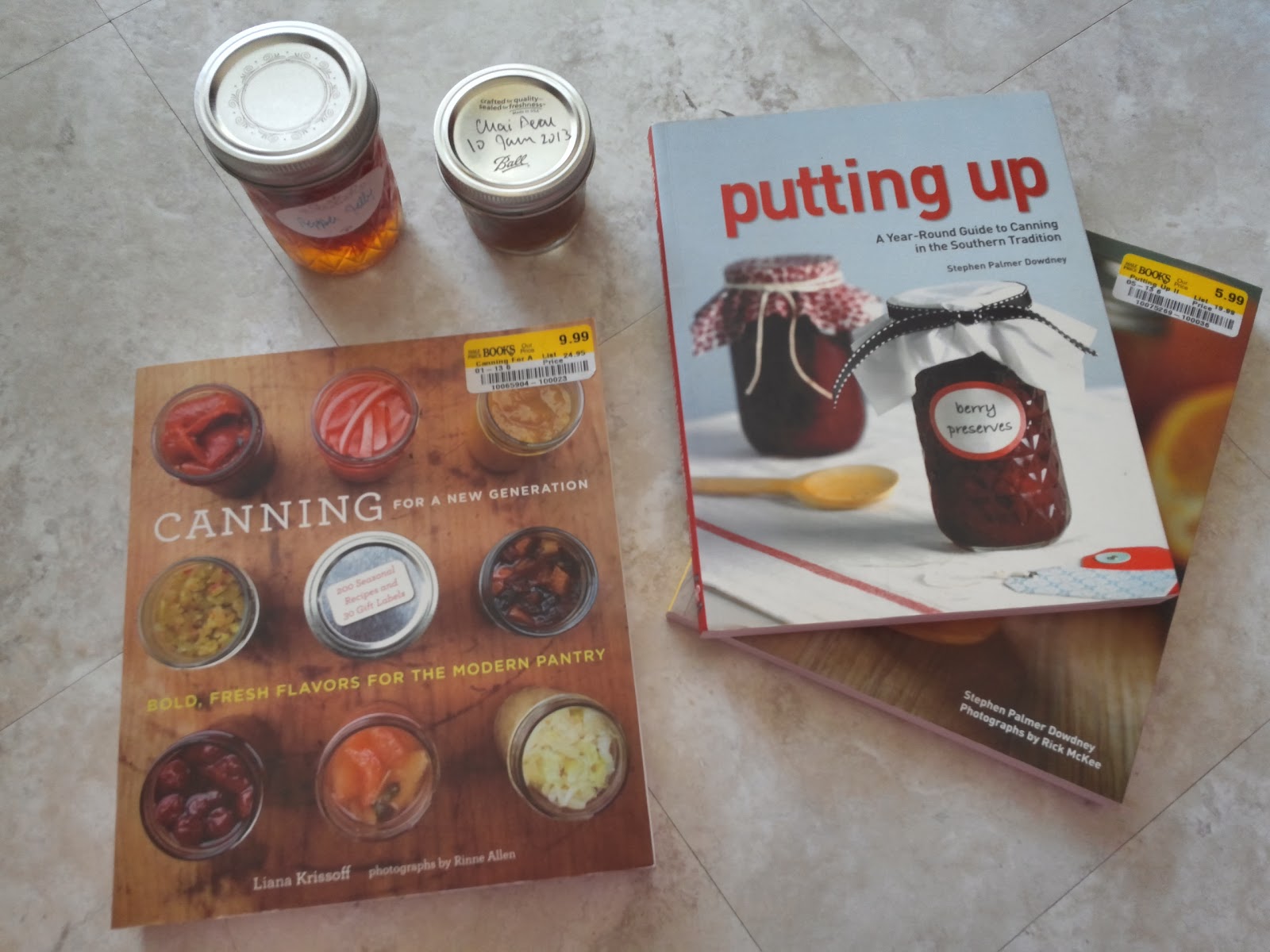
As you can see from the things I choose to cook, my current fascination is with canning. My grandmothers and mother canned, and I'm teaching my daughter how to do it. Not only is it incredibly satisfying to make delicious things to serve, it's even more satisfying to know exactly what went into it. I can use fruit and vegetables from a farmer's co-op or just use organic fruit. I can regulate the amount of sweeteners. It's also handy to have a pantry full of this stuff when you need a quick gift for someone. The first canning book I ever read was Rick McKee's Putting Up. I quickly found a copy of the companion book, Putting Up More. McKee, who has canned professionally for many years, provides the best explanations of the canning process (and all its different methods) I've ever seen. While I don't love some of his practices (inversion canning is not recommended by the USDA), and I'm not a fan of the Sure-Gel thickening aid he suggests canners use, I owe him a huge debt of gratitude for my canning knowledge. His recipes are also very safe because he carefully tests and explains the acidity of each recipe.


 While I very much enjoy McKee's knowledge base and his salsa recipes, Liana Krissoff's Canning for a New Generation rocked my world, recipe-wise. Her recipes are unlike any I've ever seen, and they speak to my little foodie soul. I CAN'T WAIT to try her Strawberry and Lavender Jam and her Mango Jam with Lime. She has a fantastic collection of eclectic recipes for mad canners that include mini tamales (!), kimchi, and pickles.

My grandfather has long since advocated eating weird things for health. As a kid, I never really paid attention to his obsession with echinacea and herbs. However, the man is into his '90s, in amazing health, and still living on and running his farm, so it's either his eating habits or his sheer ability to fly under the Almighty's radar keeping him so prime. Anyway, I'm sort of taken with the idea of making my own sauerkraut (which has been widely advocated by many holistic practitioners as being rife with health benefits). I made a badly researched try a few months ago and came away with an important lesson: don't start a batch of homemade sauerkraut and go to Costa Rica for drunken derby vacation, thus leaving said sauerkraut to its own devices. I wouldn't wish the result on anyone. After I recovered from the mess I came home to, I started reading up on how to undertake the process correctly. A couple of weeks ago, I found this little gem at a used bookstore. Klaus Kaufman's 2002 Making Sauerkraut and Pickled Vegetables at Home: Creative Recipes for Lacto-Fermentated Food to Improve Your Health goes through the history of fermented foods (did you know that sauerkraut is not originally German? They stole it from Genghis Khan, who evidently traveled with crocks of fermented foods, including cabbage), the science of the process and its health benefits, and contains many detailed instructions on how to pickle just about anything. He also includes some great ideas of dishes to use pickled food in, and, damn, they look good. 

I've also photographed some herbs and spices used for pickling here. Taken from Central Market's bulk bins, I got Juniper berries for $.45, caraway seed for $.22, and whole brown mustard seeds for $.14. Experimentation doesn't have to cost the earth!

Let me just begin by saying that Nigel Slater is a culinary stud and writes about food in a way that is so sexy, you'll need to step outside for a cigarette after. This British writer, whom I discovered after a dear friend sent me several of his books as a wedding gift, has a variety of good cookbooks out, including Real Fast Food. However, The Kitchen Diaries: A Year in the Kitchen with Nigel Slater, is like the smart prose of Jane Austen (the man is British) meets your favorite novel with a dash of food porn added for good measure. I read this cover to cover in a few days. Slater goes through his year, documenting what he made and ate, depending on what was locally available, throughout the year. He's a real person too, so some days he cooks fancy for friends and families, and some days he throws together a quick five or twenty-five minute weekday dinner that will make you SWOON. The variety of the dishes he makes, his personality as a writer, and the photography here will make you appreciate food if nothing else has.

And, of course, I'll end with a cookbook devoted to the cuisine of the Divine Miss Jane. My love of literature really began with Jane Austen, and she was the topic of the first successful dissertation chapter I wrote. My husband got me this particular cookbook, entitled The Jane Austen Cookbook by Maggie Black and Deidre Le Faye a few years ago. Now that I have time, I'd like to investigate what I have always though of as the dubious traditional cuisine of Austen's England. Though I'll probably skip Vegetable Pudding, I am going to experiment with Fricassee of Turnips and something called, I kid you not, A Nice Whet Before Dinner. It gives a great history of the way a table would have been set and the expected courses, etc... during Austen's time. Don't judge me; I'm a nerd.
The Jane Austen Cookbook. Next to it is a clay figurine of Pride and Prejudice, made by my sister, that stood atop my wedding cake with a figure of As I Lay Dying by William Faulker for my husband.
 To end, I was reading a bit online about the history of cookbooks, and I found a lovely, remarkable website developed at Michigan State University, called Feeding America. It's an amazing archive of thousands of cookbooks written across centuries. I foresee some afternoons spent combing this collection!